Which DJI Drone Should You Buy in 2026?
Choosing the best DJI drone in 2026 is more confusing than it has ever been, especially if you are in the US. Not because the drones themselves are bad. In fact, most of them are excellent. It is because the market has changed in ways that affect which one makes sense for you. The answer to this question may not have much to do with the machine’s specs at all. This guide will help you figure out which DJI drone is right for you based on what you actually want to do with it, your budget, and where you are buying from.
But if you just want to hear what I think, here’s my ranking based on use cases:
Quick Answer: Best DJI Drone in 2026 (Top Picks by Use Case)
- Best DJI Drone Overall: DJI Mini 4 Pro
- Best DJI Drone on a Budget: DJI Mini 4K
- Best Value DJI Drone: DJI Mini 3
- Best DJI Drone for Semi-Professionals: DJI Air 3
- Best Image Quality: DJI Air 3S
- Best DJI FPV Drone: DJI Avata 2
I’ll explain why I came to these conclusions in a bit, but let’s address the elephant in the room first.
DJI Drones in the US (2026): What You Need to Know
DJI, which makes most of the drones worth buying in the consumer market, is navigating serious FCC authorization issues in the US. Because of that, new models are struggling to reach American shelves. You may be able to get some (like the Mini 5 Pro) through importers or Amazon third party sellers, but you’ll lose some of the advantages of using an authorized reseller. At the same time, prices on existing, approved, models have dropped significantly, in some cases even to their lowest point ever. And this changes things when we ask ourselves what is the best DJI drone?
The usual advice is to wait for the next generation if your budget and needs allow it, but that no longer applies in the same way if you are in the US. You can buy the drone sitting on the shelf right now, while waiting for products that may or may not arrive later is a gamble most buyers don’t need to take.
My advice for US buyers in 2026: don’t wait for the next model. Buy what is available now while pricing is favorable and warranty-backed stock still exists. Not only may the next model not arrive, but even if it does, warranty support might not be included. Especially since the current low prices for these fully supported drones will likely rise when products start to sell out.
DJI Drones in the rest of the world
Outside the US, the picture is more straightforward. Most current DJI models are available at normal retail prices through authorized resellers, and the full lineup is accessible to anyone who wants a DJI product which means we can evaluate all drones to see which is the best DJI drone in 2026.
What to Consider Before Buying a DJI Drone
The most common mistake when buying a drone is researching the wrong question. Most people ask “What is the best drone?” when they should be asking “What do I want to do with a drone?” The first question may get you a completely irrelevant answer, while the second question will get you a lot closer to figuring out what the best DJI drone is for you.
Why, you ask? Well, the answers can point in very different directions depending on your situation. So before you look at any specific model, ask yourself these questions:
Where will you mostly fly? Open fields, beaches, and parks are forgiving environments where obstacle avoidance matters less. Urban areas, forests, and anywhere with lots of things to fly into make obstacle avoidance a feature that will give you peace of mind.
Will you travel with it? If the drone is going in a carry-on bag or backpack, then weight and pack size are big factors. A drone that looks portable on paper can still easily take over a bag, especially if you are also bringing along some accessories.
What will you do with the footage? Sharing clips on social media has very different requirements from color grading your footage for a movie or even for a real estate listing. A drone that’s perfect for Instagram is not necessarily the right tool for a real estate photographer.
Are you new to flying? Obstacle avoidance can be a game changer for beginners but isn’t required if you only fly in open areas anyway. That also doesn’t mean it is useless for experienced pilots, it’s definitely not. But it matters more for beginners, who naturally have less real-time flying experience and are more likely to make mistakes that send a drone into something.
What is your budget really? The drone itself is not the only cost. Add spare batteries, a microSD card, a case, possibly DJI Care Refresh (protection plan), and some filters if you get a bit more serious, and the real cost of ownership quickly turns out to be higher than the sticker price.
Drone Weight Rules Explained (Why 249g Matters)
This comes up in every drone-buying decision these days, so it is worth understanding this properly rather than just knowing the number.
In the US, drones under 250g (0.55 lbs) flown recreationally don’t require FAA registration, though the free TRUST test is still required. Drones 250g and above require registration for all flights, regardless of whether they are recreational or commercial. The registration cost is $5, so that’s generally not a factor, but it is another hoop to jump through, and you are subject to more restrictions on where you can fly.
In most of Europe, sub-250g drones fall into the Open Category A1 under EASA regulations, which allows flying near people without additional licensing. Heavier drones fall into more restrictive categories. That said, laws vary by country, so you should always check with your local aviation authorities.
Similar weight-based categories exist in Australia and many parts of Asia, but the details differ from country to country. So no matter where you fly, always confirm the local rules before taking off.
The practical upshot: if you want the simplest regulatory situation and maximum flexibility about where you can fly, a sub-250g drone removes a layer of complexity for you. It is not the only consideration, but it is definitely a point to consider if you are just flying for fun or social media content.
One important caveat that often gets overlooked: some drones offer extended flight time batteries that push the takeoff weight above 249g. When that happens, you no longer get the sub-250g regulatory benefits. So be sure to check the takeoff weight of the drone (with the battery and potentially other accessories included) and not just the base weight.
With all that context in mind, here is how the current lineup actually breaks down in practice.
Best DJI Drone by Use Case for 2026
Just getting started in the US: “I want to try DJI drones without spending a lot”
 In that case I think the best DJI drone is the DJI Mini 4K. It is priced at around $209 at the time I’m writing this and that is the starting point. The Mini 4K gives you the full DJI experience including stabilized 4K video, GPS hold, Return to Home, and enough flight time (31 minutes according to DJI) to learn to fly without constantly watching the battery.
The 1/2.3-inch sensor is smaller than the sensor you’ll find in more expensive models and there is no obstacle avoidance. But, at this price point, it is the right tool to find out if flying a drone is something you enjoy and want to keep doing or if the drone ends up in a drawer.
If you find yourself enjoying flying and you want a drone that is noticeably better, without spending a lot more money, the DJI Mini 3 currently comes in at $299 to $379 (depending on the configuration you choose) and it is the natural step up. It has a larger 1/1.3-inch sensor, 4K HDR, true vertical shooting, and 38 minutes of flight time. Still no obstacle avoidance, but you get a meaningfully better camera without having to spend a lot more money. As a bonus you get great battery life, even better than on newer Mini models.
Just getting started outside the US: “I want the newest entry-level drone”
If you are looking to buy a drone outside of the US, then things have changed significantly on April 23, 2026, when DJI launched the brand new Lito series. DJI just released two new sub-250g drones that effectively replace the Mini series at the entry level, but at this point they’re only available to buyers outside of the US.
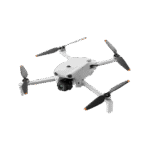 The DJI Lito 1 is priced at around €339 (£299) at this point in time. It has a 1/2-inch sensor, shoots 4K video and JPEG as well as DNG photos at 12MP and 48MP, it has omnidirectional obstacle sensing, and it weighs under 249g. That is a meaningful step up from the previous entry level, even if it comes at a higher price point. As I mentioned earlier, having obstacle sensing alone makes it a much safer first drone and reduces your chance of accidents significantly.
The DJI Lito X1 at around €419 (£369) steps up to a 1/1.3-inch sensor, adds forward-facing LiDAR for better obstacle detection in low light and around thin obstacles like branches, 42GB of internal storage, and 10-bit D-Log M for color grading. At this price and with those specs it is genuinely hard to argue against it for anyone buying their first serious drone outside the US.
Unfortunately, as already mentioned before, neither drone is available in the US (at the moment). DJI’s FCC authorization issues mean that although the Lito series launched globally, there was no US release and there is no clear timeline for when or if that will change.
Casual flyer who wants a capable drone: “I want good results without over-complicating things”
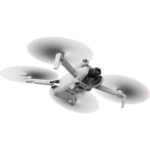 The DJI Mini 4 Pro is the answer to the best dji drone question for most people in this category. Sub-250g, omnidirectional obstacle avoidance, 4K/60fps, RAW stills, ActiveTrack 360° that actually works from any angle including the front, and 34 minutes of flight time. It does everything a casual to intermediate pilot needs and nothing about it feels like a compromise. So most of the time people ask me, this is what I recommend.
However, if you are outside the US and budget stretches far enough, the DJI Mini 5 Pro adds a 1-inch sensor and improved low-light performance at a higher price point. For US buyers it remains difficult to find through mainstream retail channels, although third-party sellers on Amazon do offer it.
Content creator who shoots for social media: “I want footage that looks good for Instagram, TikTok and YouTube Shorts”
I’m again looking at the Mini 4 Pro for being the best DJI drone in this catefory. It’s true vertical shooting, at full 4K/60fps resolution, makes it particularly well suited for short form content creation. Aside from that, the ActiveTrack front-facing tracking feature is very useful for solo creators, giving them more freedom to film themselves from dynamic angles. It perfectly fits the workflow of someone who prefers to edit on their phone and post content the same day, whenever possible.
If you’re on a tighter budget, the DJI Mini 3 is still one of the best value options. Its rotating gimbal enables true vertical shooting as well, and at its current discounted price it is ideal for new social media creators who want solid quality without spending too much.
Serious hobbyist or semi-professional: “I want creative flexibility and I’m willing to pay for it”
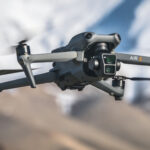 This is where the DJI Air 3 makes its case. The dual camera system, consisting of a 24mm wide lens and a 70mm telephoto lens, both capturing 4K/60fps with 10-bit D-Log M, changes what you can do in a single flight. Being able to switch between a sweeping wide shot and a compressed telephoto perspective without landing is incredibly helpful for anyone who wants to tell more complex visual stories. It also has great battery life and is rated by DJI for 46 minutes of flight time. This is why I think this is the best DJI drone for people who are more serious about their videography or people who have to deliver quality material to their clients.
The Air 3 does require FAA registration for all US flights as it weighs 720g / 1.59 lbs. It is also a step up in size and complexity compared to the DJI Mini series and the dual camera system is not available on any of the other drones at this price point.
At its current discounted price, down from the original $1,099 launch price, the Air 3 represents particularly good value. Check current pricing as it has been fluctuating.
Real estate photographer or professional content creator — “I need the best image quality I can get in a portable package”
The DJI Air 3S at $1,099 is the current answer. A 1-inch sensor, LiDAR obstacle sensing that works in low light, 4K/60fps HDR, 45 minutes of flight time, and the same dual camera system as the Air 3. The 1-inch sensor is a big step up from the 1/1.3-inch sensor. You will definitely notice a difference when you are shooting during the golden hour, on overcast days, and in any other situation where the light isn’t cooperating.
As mentioned earlier, the Air 3 requires FAA registration, weighs 724g / 1.60 lbs, and it is a real investment. But for anyone doing professional work where image quality directly affects what clients are willing to pay, the Air 3S will earn back its price.
FPV and immersive flying: “I want to experience first-person flight”
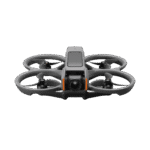 The DJI Avata 2 is DJI’s option for anyone who wants to pick up FPV flying. It is a cinewhoop-style drone and as such it brings you propeller guards, 4K/60fps, and DJI’s O4 transmission. You fly the DJI Avata with goggles which gives you a completely different first-person perspective. It is significantly more approachable than traditional DIY FPV builds while still delivering the immersive flying experience. Not a camera drone in the traditional sense, but if the flying experience itself is what you are after, it is the right place to start.
What exactly is a cinewhoop-style drone you ask?
A cinewhoop-style drone is a small FPV drone built to capture smooth cinematic video in tight spaces. Think of it as a mix between a racing drone (fast, agile, manually controlled) and a camera drone (made for nice footage).
The Full Lineup at a Glance
| Drone | Weight | Best For | Approx. Price usd | US Availability |
|---|---|---|---|---|
| DJI Mini 4K | 249g / 0.549 lbs | First drone, US budget flyer | ~$209 | ✅ Available |
| DJI Lito 1 | 249g / 0.549 lbs | First drone, Europe/UK | €339 / £299 | ❌ Not available |
| DJI Mini 3 | 249g / 0.549 lbs | Casual flyer, social media | ~$299-379 | ✅ Available |
| DJI Lito X1 | 249g / 0.549 lbs | Entry-level creator, Europe/UK | €419 / £369 | ❌ Not available |
| DJI Mini 4 Pro | 249g / 0.549 lbs | Most people’s best choice (US) | ~$759 | ✅ Available |
| DJI Mini 5 Pro | ~249g / ~0.551 lbs | Best mini, 1-inch sensor | ~$959 | ⚠️ Importer only |
| DJI Air 3 | 720g / 1.59 lbs | Dual camera, long flights | Check current price | ✅ Available |
| DJI Air 3S | 724g / 1.60 lbs | Professional, best image quality | ~$1,099 | ✅ Available |
| DJI Avata 2 | 377g / 0.831 lbs | FPV, immersive flying | ~$526+ | ✅ Available |
Prices are approximate and change. You can always check current pricing using the links in the table above. US availability reflects the situation as of April 2026 and may change.
Still Not Sure Which is the best DJI Drone for you?
If you want the safest choice for most people, get the DJI Mini 4 Pro.
If price matters most, get the DJI Mini 4K.
If you want serious camera power, choose the DJI Air 3S.
Things Worth Knowing Before You Buy
Buy spare batteries. Every drone’s rated flight time is measured under ideal conditions. Real-world flying in wind, with the camera actively working, without maintaining the optimal speed and height, will always result in less time. Having at least two batteries means you are not cutting your sessions short. The Fly More Combos from DJI include three batteries as well as a charging hub and are almost always better value than buying batteries separately later so do the math first. You can have the best DJI drone in the world but if you’re grounded because you’re out of power, what good is it?
Get a microSD card. Most DJI drones have no internal storage, or very limited internal storage. A high-speed microSD card is not optional, it is something you need if you want to make video or photos. So definitely buy a card before your first flight.
Consider DJI Care Refresh. DJI’s own accident protection plan covers fly-aways, water damage, and collision damage with a replacement drone rather than a repair bill. Especially if you are a first-time flyer, the peace of mind this gives you is worth the cost. Beginners crash. It is not a question of if but of when. And yes, I’m speaking from experience here. Of course you might be the exception but is that really a risk worth taking?
The TRUST test is required in the US for all recreational drone pilots regardless of drone weight. It is free and takes about 20 minutes online. Do it before your first flight.
Check local rules before you fly. Regulations vary significantly by country and even by region within countries. National parks, urban areas, and airspace near airports all have specific rules. The DJI Fly app includes a geofencing system that flags restricted areas, but it is not a substitute for checking the rules yourself. In the end, you are responsible for where you fly. So if the geofencing fails, that is not a legal excuse.
Where to Buy
- Check Amazon for current pricing across the full DJI lineup.
Disclosure: Links above are affiliate links. If you buy through them, I may earn a commission at no extra cost to you. It does not affect my recommendations but it does help me maintain the site.
Related DJI Drone Reviews and Comparisons 2026
- DJI Mini 3 — Full Review
- DJI Mini 4 Pro — Full Review
- DJI Air 3 — Full Review
- DJI Mini 4 Pro vs Air 3 — Head to Head
First published: April 2026. Prices and availability checked April 2026.

Leave a Reply