
The Real Question
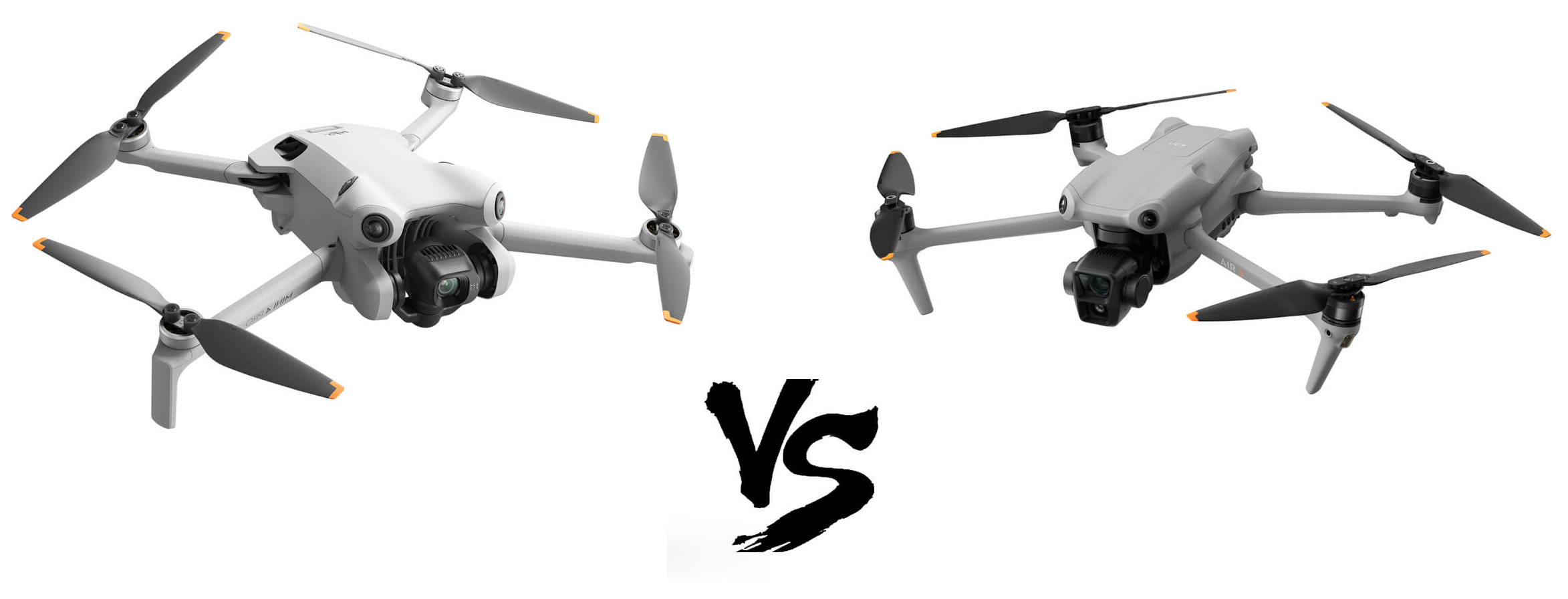
Personally, I seem to keep running across drone comparison articles that start with a spec table and end with “it depends on your budget.” And I have to admit, I’ve been guilty of that in the past as well. And even though I have done it myself, to me that’s not particularly useful. So let’s try a different approach for this Mini 4 Pro vs Air 3 review.
Let me start by being unhelpful, and telling you that the DJI Mini 4 Pro and the DJI Air 3 are both excellent drones and you’ll buy a great product regardless of which one you choose. They share the same sensor size, the same transmission system, the same obstacle avoidance capability, and both shoot 4K/60fps HDR with 10-bit D-Log M. And this makes them look very similar on paper. But are they really that similar? Because I think that the differences that do exist are meaningful and that they point strongly toward one drone, or the other, being better for you depending on what your needs are and how you actually fly.
So instead of just comparing specs, let’s look at real life situations and which drone is better for certain situations.
Where the Mini 4 Pro Wins
Traveling light
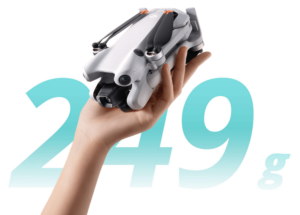
You’re heading somewhere on a plane and want to bring a drone without it taking over your carry-on luggage. In this case, the Mini 4 Pro folds down to roughly the size of a large smartphone, albeit a bit thicker, and weighs a mere 249g / 0.549 lbs. Meanwhile the Air 3 folds down to something closer to a water bottle and weighs 720g / 1.59 lbs. That’s nearly three times the weight before you have even packed a controller, spare batteries, or anything else.
The weight should probably also be a major point of consideration for backpackers, cyclists, hikers, or anyone else who is limited by luggage space and/or luggage weight restrictions. If you want, or have to, travel light then the Mini 4 Pro is the drone that you will actually bring with you. Meanwhile, the Air 3 is the one you leave in the hotel room when your bag is already full.
Flying where registration is a headache
At 249g, the Mini 4 Pro falls under the FAA’s 250g registration threshold for recreational flying in the US while the Air 3 comes in at 720g and requires registration before you are allowed to fly it, regardless of whether the reason for your flight is recreational or commercial. In most of Europe the sub-250g classification also puts the Mini 4 Pro in a much more permissive regulatory category allowing you to use it a lot more with a lot less constraints.
So if you want to fly casually while crossing into different countries and you don’t want to think about the registration paperwork every time you cross a border, the Mini 4 Pro’s weight class is a great advantage.
Filming yourself solo for TikTok, Instagram or Youtube shorts
Here’s something that a couple of comparisons I’ve seen have unfortunately gotten wrong: while both drones can create vertical video there is a difference in how they do it. On the Mini 4 Pro the gimbal rotates which changes the orientation of the lens and the sensor. This means you get true vertical shooting that uses the full sensor at 4K/60fps. Meanwhile the Air 3 uses the full height of the sensor but crops the sides, so it’s not quite the same. This also means that the Mini 4 Pro is truly the better drone for social media content creators who fly alone.
Flying in built-up areas with people nearby
Sub-250g drones occupy a different regulatory category in most countries which means that there is a lot more flexibility regarding where you can legally fly without needing additional permits. If you’re filming in urban environments, near crowds, or in areas with airspace restrictions, the Mini 4 Pro’s weight class opens doors that will stay closed to the Air 3 unless you’re willing to jump through a lot of hoops. That doesn’t mean you can fly just anywhere but it does give you a whole lot more options to choose from.
Budget is tight
At the time I’m writing this article, the Mini 4 Pro starts at around $720 (check the current price here). The Air 3 starts at around $885 (check the current price here). That’s more than a 20% price difference on the base models, and it widens further when you factor in that everything, from DJI Care Refresh protection to accessories, costs more for the Air 3. If that makes the difference between buying now and waiting six months, the Mini 4 Pro is a complete drone, not a compromise, assuming you don’t need any of the features that are only found on the Air 3, and I think you should get the Mini 4 Pro.
Where the Air 3 Wins
Real estate and property photography
You’re filming a property and need to show both the wide establishing shot of the house and its surroundings, as well as the detail of the architecture, the garden, or the view from the upper floor. With the Mini 4 Pro you have one focal length. You’d need to physically fly the drone closer to get a similar shot and it would still be wide so it changes your perspective and your composition.
With the Air 3 you can switch to the 3x telephoto while you’re in the air and you can compress the perspective without moving. The background gets closer, the subject gets isolated, and you get a completely different shot from the same position. For real estate photographers this is not a “nice-to-have” feature but it actually changes, and improves, what you can deliver to a client.
Wildlife and nature filming
Getting close to wildlife with a drone is often either impossible or irresponsible. The Air 3’s 70mm telephoto lets you stay at a respectful distance while you can still fill the frame with your subject. A bird on a branch, a deer in a field, a seal on a beach, these are all shots that require reach to get that perfect image. The Mini 4 Pro’s single wide-angle lens means you either have to fly uncomfortably close to your subject or you have to accept a small subject in a big frame.
Long sessions without battery swaps
The Air 3 is rated for 46 minutes. The Mini 4 Pro on the other hand is rated for 34 minutes. In real-world flying that translates to roughly 35 to 40 minutes versus 25 to 28 minutes. If you’re covering a large area, shooting at golden hour when every minute of good light matters, or working on a commercial project where interrupting a shoot to swap batteries is inconvenient, the Air 3’s extra time in the air will often make the difference.
The Fly More Combo with three Air 3 batteries gives you close to two hours of total flight time. That covers a full morning of real estate shooting across multiple properties without having to re-charge between locations.
Windy conditions
At 720g the Air 3 is heavier and therefore more stable in windy conditions. On paper both drones are rated for similar wind resistance levels but the Air 3’s extra weight means gusts don’t push it around as much as they do the Mini 4 Pro. If you regularly fly in coastal areas, on hilltops, or anywhere that gets consistent wind, the Air 3’s stability advantage will clearly show in your footage. While the Mini 4 Pro handles moderate wind very well, especially for its size, it’s still a light little thing that will get pushed around more when the wind picks up.
Telling a fuller visual story
Think about how professional cinematographers shoot. They don’t just use one single focal length. Instead they cut between wide shots that establish context and tighter shots that create intimacy and detail. The Air 3 gives you that toolkit in one single drone. A wide shot of the coastline, then a telephoto of the waves breaking on the rocks. A wide shot of the city skyline, then a compressed telephoto shot that makes the buildings feel closer together. These are editing options that simply don’t exist with a single-camera drone. Sure, you can crop while you’re editing but you will miss the difference in perspective that you get from the different focal lengths. And the end result of using a single focal length will always be less interesting visually than it’ll be when you use multiple different focal lengths.
The Situations Where It Really Doesn’t Matter
It’s also worth being honest about the times your choice makes very little practical difference:
Image quality in good light — both drones use the same 1/1.3-inch sensor and both shoot 4K/60fps with 10-bit D-Log M. In daylight shooting conditions the wide angle footage from both drones is virtually indistinguishable. If someone tells you the Air 3’s wide camera produces noticeably better footage than the Mini 4 Pro in normal light, they’re wrong and they are just trying to justify that they spent more money on their drone.
Obstacle avoidance — both have omnidirectional sensing and both use the APAS 5.0 system so in that regard they are pretty much the same as well.
Transmission and range — both use the O4 system with 20km / 12.4 miles range in FCC mode so there’s no real difference there either.
Smart flight modes — both have Hyperlapse, QuickShots, Waypoint flight, and most of the same automated features. The Mini 4 Pro actually used to have the edge on front-facing ActiveTrack but firmware updates have changed that and now they’re tied again.
Head to Head
| DJI Mini 4 Pro | DJI Air 3 | |
|---|---|---|
| Weight | 249g / 0.549 lbs | 720g / 1.59 lbs |
| FAA registration (US) | Not required (recreational) | Required all flights |
| Cameras | Wide angle | Wide angle + 3x telephoto |
| Sensor | 1/1.3-inch CMOS | 1/1.3-inch CMOS (both) |
| Video | 4K/60fps HDR | 4K/60fps HDR (both cameras) |
| Vertical shooting | Full sensor, 4K/60fps | Cropped to 2.7K/60fps |
| ActiveTrack front-facing | Yes | Yes (although this might be missing if you still need firmware updates) |
| Flight time | 34 min (rated) | 46 min (rated) |
| Wind resistance | 10.7 m/s / 23.9 mph | 12 m/s / 26.8 mph |
| Transmission | DJI O4 | DJI O4 |
| Starting price | ~$720 | ~$885 |
Prices fluctuate so check the current price of the Mini 4 Pro here and the Air 3 here.
So Which One Should You Buy?
Buy the Mini 4 Pro if you travel frequently and portability matters, you fly recreationally and/or you want to stay under the registration threshold. Also buy the Mini 4 Pro if you’re a solo content creator who films yourself, you shoot a lot of vertical content for social media, or the price difference is meaningful to your budget.
Buy the Air 3 if you shoot real estate or architecture and need different focal lengths, you film wildlife or subjects you can’t get close to (weddings anyone?), you do long sessions where battery life affects your work, you regularly fly in windier conditions, or you want to tell more complex visual stories with a single drone.
The honest summary is this: the Mini 4 Pro is the better drone for most recreational pilots. The Air 3 is the better drone for anyone doing professional work where the second camera solves a real problem. But neither of these drones is a bad choice. They’re just different answers to different questions.
Where to Buy
DJI Mini 4 Pro
- Amazon — check current price
DJI Air 3
- Amazon — check current price
Disclosure: Links above are affiliate links. If you buy through them I earn a small commission at no extra cost to you. It doesn’t affect what I recommend.
Related Reading
First published: April 2026.

Leave a Reply